

On August 12, 2026, a solar eclipse will be visible in the evening sky in parts of Europe. The path of totality will cross Greenland, Iceland, and northern Spain. In Germany, the setting Sun will offer a rare sight: Instead of a round circle, only a portion of our star will be visible at sunset due to the Sun being eclipsed by the Moon.
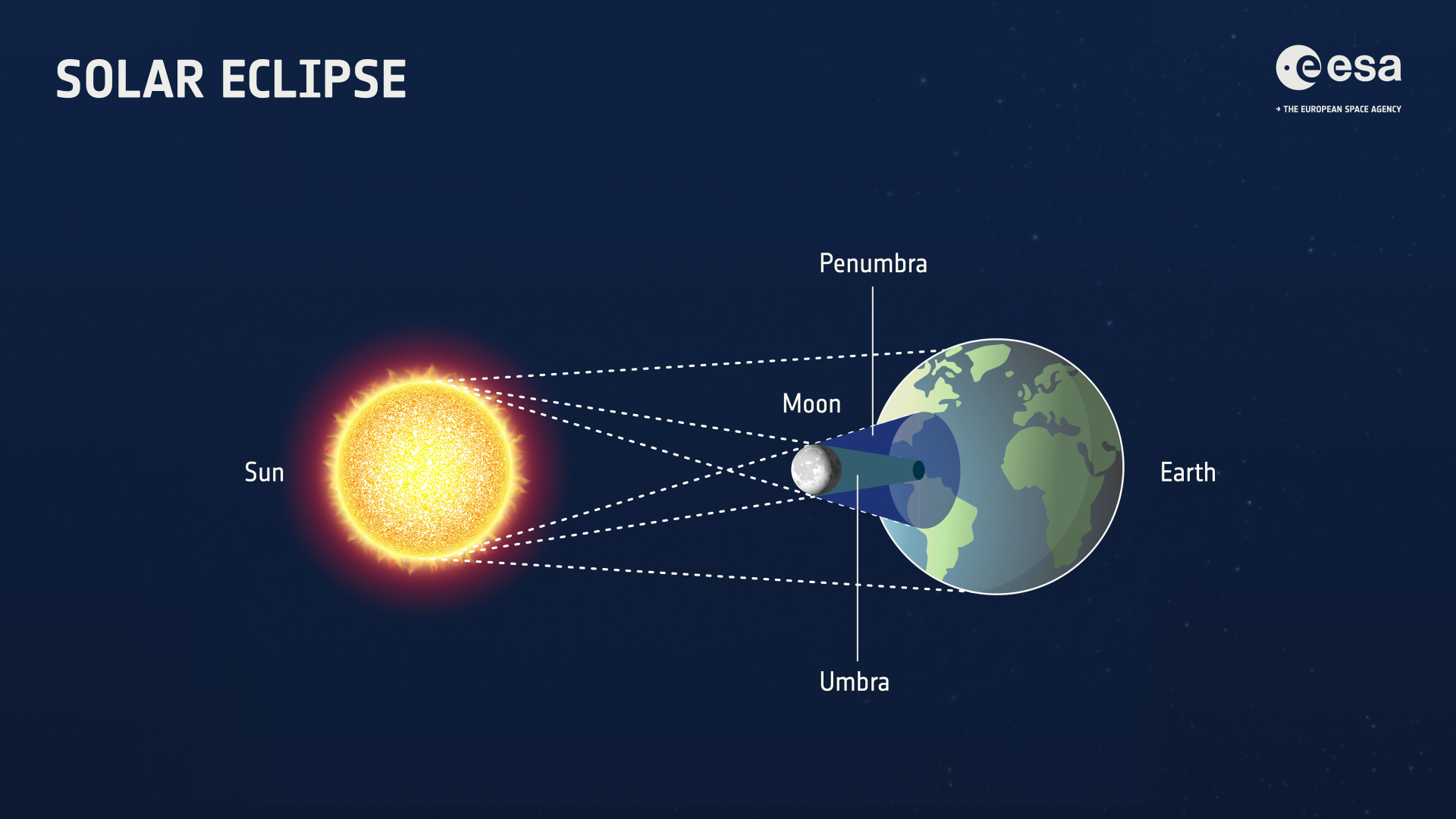 Quelle: ESAAn eclipse happens when the Sun, Moon and Earth align. During a solar eclipse, the Moon moves between the Sun and the Earth, blocking the Sun’s light. The next solar eclipse will happen on Wednesday, August 12, 2026. Only those regions that are in the path of totality will experience a total solar eclipse.
In Germany, it will be visible as a partial solar eclipse in the evening. Depending on the location, the start of the partial eclipse varies between 7.11 pm in Northern Germany and 7.20 pm in Southern Germany. Starting time here in Jena will be at 7.18 pm.
During a partial eclipse the Moon does not completely cover the Sun. On August 12, 2026, the eclipse occurs at sunset. The peak of the eclipse seen from Jena, Thüringen, when the moon covers a big part of the Sun (but not all of it), is at 8.11 pm. Sunset on that summer day is at 8.40 pm.
For that reason, the Tautenburg SolarLab at the Thüringer Landessternwarte can not observe the Sun during the solar eclipse in August 2026. The Sun is too far to the West and the trees are in the way. However, the European Space Agency ESA will stream the event live on the Internet.
Three years, three solar eclipses
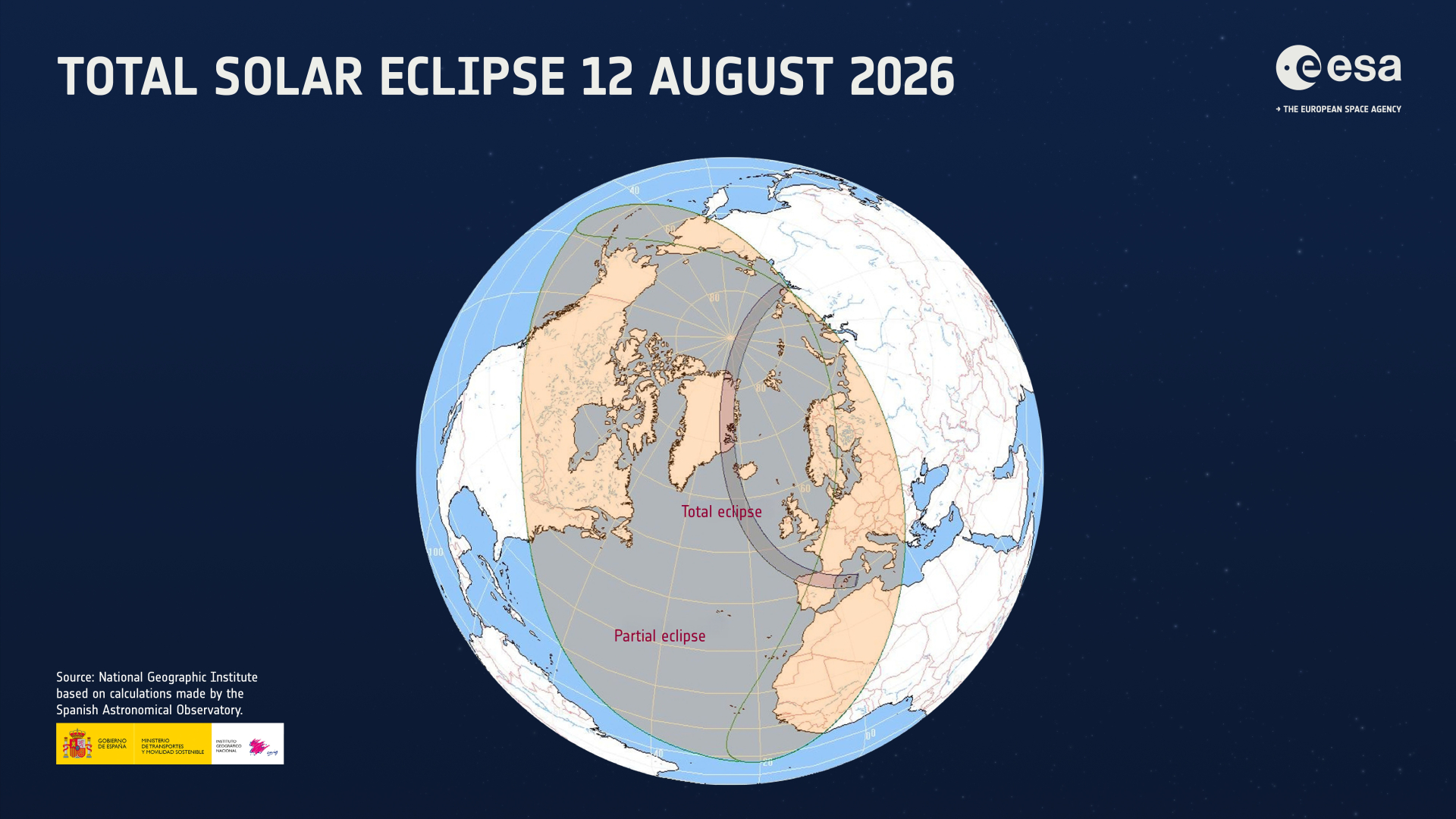 Quelle: ESAIt will take until September 3, 2081 until there will be another total solar eclipse visible in Germany. However, Europe has no less than three solar eclipses coming up during the next years: The first will be on August 12, 2026. This total solar eclipse can be observed in Greenland, Iceland, Spain and Portugal. A year later, on August 2, 2027, another total solar eclipse will be visible in Southern Spain. And on January 26, 2028, an annular solar eclipse can be watched in Portugal and Spain. During an annular eclipse, the Moon is centered in front of the Sun but does not completely obscure it. It leaves a ring of sunlight visible around the Moon’s edges. Other parts of Europe will experience partial solar eclipses on these days.
Protect your eyes
To be ready for eclipse watching, people need special eyewear that protects their eyes from too much Sunlight. To watch the eclipse on August 12, 2026, find an unobstructed view to the Western horizon, put on the eclipse glasses and enjoy the show.
Prof. Dr. Markus Roth, director Thüringer Landessternwarte, encourages everyone to watch the event: “A solar eclipse is a rare moment when the clockwork of the cosmos aligns perfectly with human curiosity. It is a wonderful way to experience our place in the universe.”
New Moon lets shooting stars shine
Even though the main phase of the solar eclipse cannot be observed from Germany, stargazers are in luck: The Perseids Meteor Showers, active between July 17 and August 23, 2026, will reach their maximum on August 12 and August 13. Weather permitting, we should have a great viewing opportunity of shooting stars in a dark night sky during the new Moon.
So mark your calendar and go watch a partial solar eclipse and the Perseids on August 12, 2026. It is also the Lange Nacht der Astronomie (Long Night of Astronomy) with lots of interesting stuff going on.
|
Markus Roth, Director Thüringer Landessternwarte, explains in this short video where the solar eclipse will be visible on August 12, 2026. Watch the long version of this video on our Youtube Channel. |